Source Water Quality Monitoring Conductivity Probe for Lab, Industry, Agriculture
Compare 30 water quality monitoring conductivity probe options from verified Chinese suppliers. Buyers can evaluate specifications like accuracy, resolution, and signal output for applications in biochemistry, medical research, and food analysis; compare the available evidence and request quotations based on your requirements.
Key considerations
Products List


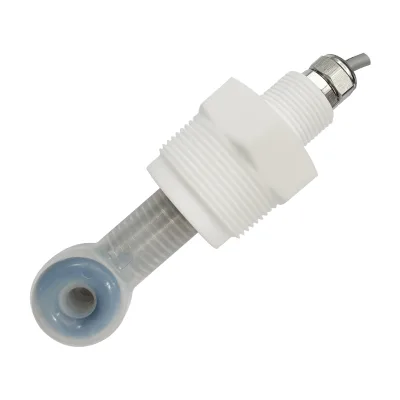


Comprehensive Sourcing Guide
Water Quality Monitoring Conductivity Probe Sourcing Guide
Procuring water quality monitoring conductivity probes requires a strategic approach that balances technical precision with commercial reliability. Buyers must navigate a diverse market where specifications vary significantly across different models and manufacturers. The core challenge lies in identifying probes that meet specific environmental conditions while ensuring long-term data integrity. This guide provides a structured framework for evaluating potential suppliers and selecting the right instrumentation for your operational needs.
Successful sourcing begins with a clear definition of application requirements, including the type of water being tested and the desired output signals. Whether for general freshwater testing or high-pressure resistant environments, the probe’s material composition and response time are critical factors. By aligning technical capabilities with operational goals, buyers can avoid costly mismatches and ensure that the selected equipment delivers accurate, consistent measurements over its service life.
Product Scope and Observed Listing Signals
The current market offers a wide array of water quality monitoring solutions, ranging from simple pH electrodes to complex conductivity probes with integrated temperature compensation. Listings often highlight features such as RS485 signal output, 4-20mA analog signals, and automatic temperature compensation within specific ranges like 0-60°C. Buyers should observe that product models vary, with some designed for general freshwater testing and others built for high-pressure resistance, indicating a need for careful selection based on the specific monitoring environment.
Observed listing signals also reveal variations in physical attributes, such as weight, dimensions, and packaging standards. For instance, some probes are lightweight and portable, while others are heavier and designed for fixed installations. The presence of certifications like ISO, FCC, and RoHS suggests a baseline level of quality control, but buyers must verify that these certifications apply to the specific model being purchased. Understanding these signals helps in filtering out irrelevant options and focusing on products that match the required technical and physical specifications.
Technical Specifications to Verify
When evaluating conductivity probes, buyers must verify key technical parameters such as measurement range, accuracy, and resolution. Common specifications include a measurement range of 0-10000mg/L and an accuracy of ±3% or ±1% F.S, depending on the model. It is crucial to confirm the resolution, which may be specified as 0.01mg/L or 0.1ug/L, to ensure the probe can detect the subtle changes required for your application. Additionally, the response time, often around 1 second, and drift rate, typically ≤0.3%Fs/24h, are vital for maintaining data reliability in dynamic environments.
Power supply and output signal compatibility are also essential technical considerations. Probes may operate on 220V/24V power supplies and offer dual output signals like 4-20mA and RS485 simultaneously. Buyers should verify the screw thread type, such as NPT3/4, and pressure resistance, which can be up to 1.0MPa, to ensure physical compatibility with existing piping systems. Furthermore, the principle of operation, such as the frequency conversion method, and the material composition, including nylon fiber and 316 electrode, should be checked to ensure durability and chemical resistance in the intended application.
Compliance and Safety Documentation
Compliance with international standards is a critical aspect of sourcing water quality monitoring equipment. Buyers should verify that the probes meet relevant safety and environmental certifications, such as ISO, FCC, and RoHS, which indicate adherence to quality and environmental management practices. These certifications provide assurance that the product has undergone rigorous testing and meets established regulatory requirements, reducing the risk of non-compliance in regulated industries. It is important to request documentation for these certifications to confirm their validity and scope.
Safety features and protective functions are also key components of compliance. Probes often include overheat and overvoltage protection, which are essential for preventing damage in harsh operating conditions. Buyers should ensure that the cooling system, such as a radiator, is adequate for the expected operating temperatures. Additionally, the warranty period, typically around three years, serves as a testament to the manufacturer’s confidence in the product’s durability. Verifying these safety and compliance aspects helps mitigate operational risks and ensures long-term reliability.
Cost Drivers and Commercial Terms
The cost of water quality monitoring probes is influenced by several factors, including the complexity of the technology, material quality, and customization options. Probes with advanced features like automatic temperature compensation, high pressure resistance, and dual signal outputs tend to be more expensive. Buyers should also consider the cost of customization, such as OEM or ODM support, which can add to the initial price but may offer long-term benefits in terms of integration and maintenance. Understanding these cost drivers helps in budgeting and negotiating favorable commercial terms.
Commercial terms, including minimum order quantities (MOQ) and lead times, play a significant role in the procurement process. While some suppliers may offer low MOQs, others might require larger orders to achieve competitive pricing. Buyers should clarify the lead time for production and delivery, as well as the terms for warranty and after-sales support. Additionally, the packaging standard, whether it is a standard carton package or a more robust option, can affect shipping costs and product safety. Negotiating clear commercial terms ensures a smooth transaction and minimizes unexpected expenses.
Supplier Qualification and Quality Control
Supplier qualification is a critical step in ensuring the reliability of water quality monitoring probes. Buyers should assess the supplier’s manufacturing capabilities, quality control processes, and track record in the industry. Suppliers with established quality management systems, such as ISO certification, are more likely to produce consistent and reliable products. It is also important to verify the supplier’s ability to provide customization support, such as OEM or ODM services, if required for specific applications.
Quality control measures, including testing and inspection procedures, should be clearly defined and communicated by the supplier. Buyers should request information on the testing standards used, such as accuracy and resolution tests, to ensure the probes meet the specified performance criteria. Additionally, the supplier’s ability to provide detailed product documentation, including user manuals and technical specifications, is essential for proper installation and maintenance. Establishing a strong relationship with a qualified supplier helps in maintaining high standards of product quality and service.
Long-Term Procurement Checks
Long-term procurement success depends on regular performance monitoring and supplier relationship management. Buyers should establish key performance indicators (KPIs) to track the accuracy, reliability, and durability of the probes over time. Regular calibration and maintenance checks are essential to ensure that the probes continue to meet the required specifications. By monitoring these metrics, buyers can identify potential issues early and take corrective actions to minimize downtime and data inaccuracies.
Supplier performance should also be evaluated periodically to ensure continued compliance with quality and service standards. Buyers should maintain open communication with suppliers to address any concerns or changes in requirements. Additionally, staying informed about industry trends and technological advancements can help buyers make informed decisions about future procurement needs. By implementing a proactive approach to long-term procurement, buyers can ensure that their water quality monitoring systems remain effective and efficient over their entire lifecycle.
FAQs
What is the measuring range for the MPG-6099 water quality monitoring conductivity probe?
The MPG-6099 model features a measuring range of 0-20mg/L. It utilizes an LED display and RS485 signal output for precise data transmission. The unit weighs 0.9kg and operates on a 220V/24V power supply. This configuration supports applications in biochemistry, medical research, and food analysis with high reliability.
Can the ASDO-6800YG probe handle high concentration measurements?
Yes, the ASDO-6800YG probe handles measurement ranges up to 0-10000mg/L (Ppm) and 0-60°C. It offers a resolution of 0.01mg/L and 0.1°C with an accuracy of ±3% and ±0.5°C. The device includes a 5m standard cable and is designed for robust industrial water quality monitoring tasks.
Which certifications are available for these water quality monitoring conductivity probes?
Available certifications include ISOCE, FCC, and RoHS. These standards ensure compliance with international safety and environmental regulations. The products originate from China, with specific models like the RK500-13A featuring automatic temperature compensation and frequency conversion methods for accurate freshwater testing applications.
What customization options are supported for these probes?
Customization options include OEM, ODM, and OBM support. Buyers can request specific modifications to meet unique project requirements. The products are packaged in carton boxes or standard packages, with origins in Shanghai and Shaanxi, China. This flexibility allows for tailored solutions in various industrial and research environments.
How does the RK500-13A ensure accurate pH and conductivity readings?
The RK500-13A uses a frequency conversion method with a 4-20mA and RS485 output signal. It features automatic temperature compensation from 0-60°C and a response time of 1s. The probe has an accuracy of ±1%Fs and a drift of ≤0.3%Fs/24h, ensuring stable performance in general freshwater testing.
What is the warranty period for these water quality monitoring conductivity probes?
The warranty period is 3 years for the ASDO-6800YG model. This coverage provides assurance for long-term industrial use. The probe includes overheat and overvoltage protection functions. Its magnesium alloy material and standard packing ensure durability and safe transport for global buyers seeking reliable water quality monitoring equipment.